VR Hangover: Why You Feel Dizzy Hours After Playing
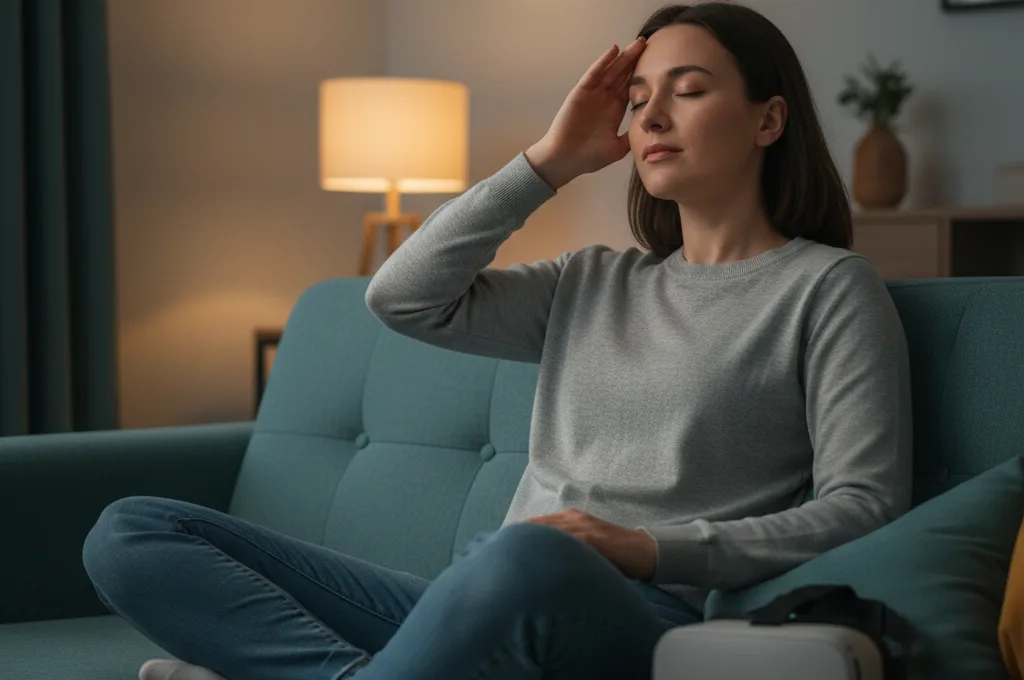
If you have just taken off your headset and still feel dizzy, disoriented, or strangely exhausted, you are experiencing what many users call a VR hangover. First, take a deep breath and try to relax. Moderate / practical. For most people, these lingering symptoms are completely normal, generally harmless, and will fade within a few minutes to a few hours.
You might be searching for answers because you expected the nausea to stop the moment you quit the game. Instead, you feel sick hours after VR and are wondering if something is wrong. This guide will explain exactly why post-VR dizziness happens, how to recover right now, and how to prevent it from happening the next time you play.
What a VR Hangover Feels Like
A VR hangover is a collection of physical and mental symptoms that stick around after you have finished a virtual reality session. While some people feel perfectly fine the second they take the headset off, others experience a strange transition period as their brain adjusts back to the real world.
If you are experiencing vr aftereffects, you might notice one or several of the following symptoms:
- A lingering sense of dizziness or lightheadedness when you move your head.
- Feeling off-balance or unsteady on your feet.
- A dull headache or intense eye strain.
- A heavy, foggy feeling in your head.
- Sudden waves of mild nausea that come and go.
- An unexpected feeling of deep exhaustion or sleepiness.
Strong evidence. According to a 2024 ACM Computing Surveys review of 223 studies, as well as a 2024 systematic review in PubMed (39396266), cybersickness in headsets is primarily driven by disorientation. While nausea and oculomotor symptoms (like eye strain) are common, disorientation is the dominant complaint. This explains why you might feel mentally foggy or physically unsteady long after the actual nausea has passed.
If you want to track how severe your symptoms are over time, you can use our comfort and severity check to measure your progress as you recover.
Why You Feel Dizzy After VR
To understand why you feel dizzy after VR, you have to understand what your brain was doing while you were playing. Virtual reality creates a deep sensory conflict. Your eyes tell your brain that you are running, flying, or falling through space. However, your inner ear (your vestibular system) and your muscles tell your brain that you are standing perfectly still in your living room.
To keep you functioning in the game, your brain works incredibly hard to adapt to this new set of physical rules. It learns to ignore the mismatch between your eyes and your body. But when you take the headset off, the rules suddenly change back to normal.
Emerging / limited evidence. Formal, rigorous research specifically looking at post-VR aftereffects is currently limited. However, the accepted mechanism among experts is sensory re-calibration. Your brain spent time adapting to a mismatched virtual world; when you return to reality, it has to "re-adapt" to the real world. This re-calibration phase is what causes you to feel dizzy or disoriented for a while. If you want to learn more about the mechanics of this sensory conflict, you can read our deep dive on why VR makes you dizzy.
Sopite Syndrome: The Hidden Side of VR Aftereffects
Sometimes, a VR hangover does not feel like dizziness or nausea at all. Instead, you might just feel incredibly tired, unmotivated, or even a bit down. You might want to crawl into bed and sleep for hours, even if you were perfectly energetic before you started playing.
This specific type of reaction is known as sopite syndrome.
Emerging / limited evidence. Sopite syndrome is a neurological response to motion exposure characterized by excessive sleepiness, lethargy, and a mildly low mood. It is commonly linked to motion sickness in general, but rigorous VR-specific evidence is limited. Because it lacks the classic "stomach upset" of motion sickness, sopite syndrome is often under-recognized. Players simply assume they are tired from standing up, not realizing they are actually experiencing a form of cybersickness.
If you feel an overwhelming wave of drowsiness after playing, do not panic. Your brain is likely just fatigued from processing conflicting sensory signals. Rest is exactly what your body needs.
How to Recover From a VR Hangover Right Now
If you are currently dealing with a VR hangover, your main priority is helping your brain re-calibrate to the real world as gently as possible. Because rigorous VR-specific studies on post-game recovery are scarce, the best approaches rely on proven methods for general motion sickness.
Moderate / practical. The following steps are widely used, sensible, and offer practical relief for most people experiencing post-VR dizziness:
- Stop playing immediately: Never try to "push through" the dizziness. The moment you feel off, take the headset off. Pushing through only makes the VR hangover last longer.
- Rest your eyes on a distant horizon: Go to a window and look at a fixed object far away, like a tree or a building. This gives your eyes and your inner ear a stable, matching reference point, helping your brain re-calibrate.
- Get fresh air and cool down: Open a window or step outside. A cool breeze can help reduce the physical symptoms of nausea and sweating.
- Hydrate: Drink a glass of cold water slowly. Avoid heavy meals, caffeine, or alcohol until your stomach settles.
- Do not drive: If you feel dizzy hours after VR or feel unsteady on your feet, do not drive a car or operate heavy machinery. Your spatial awareness is currently compromised.
- Take a nap: If you are experiencing the heavy fatigue of sopite syndrome, the best cure is simply to sleep. A short nap allows your brain to reset.
Weak evidence. Many people turn to over-the-counter antihistamines (like Dramamine or meclizine), ginger supplements, or acupressure wristbands to fix a VR hangover. While general motion-sickness evidence exists for some of these, there is little VR-specific evidence that they help after the fact. Furthermore, medications like Dramamine often cause drowsiness, which can actually make the lethargy of sopite syndrome feel much worse. Absence of evidence does not mean these remedies fail entirely, but you should not expect them to act as a magic cure.
How to Prevent Post-VR Dizziness Next Time
The best way to cure a VR hangover is to prevent it from happening in the first place. Once you have fully recovered from your current symptoms, you can change how you play to drastically reduce the chances of feeling sick again.
You do not have to give up on virtual reality. Most people can train their brains to handle VR through slow, careful exposure. If you want a complete guide on this process, check out our resource on how to stop VR motion sickness.
Optimize Your Comfort Settings
The settings you choose inside your game have a massive impact on how you feel afterward. Many games offer specific comfort options designed to reduce sensory conflict.
Strong evidence. Using a dynamic field-of-view restriction—often called a "comfort vignette" or "blinders" that darken or narrow the edges of your screen during movement—significantly reduces cybersickness in real commercial gameplay. This was clearly demonstrated in a 2021 study by Teixeira & Palmisano in the journal Virtual Reality. By blocking out your peripheral vision when you move, the vignette stops your brain from feeling overwhelmed by artificial motion.
Strong evidence. Adjusting your turning and movement style also makes a massive difference. A 2020 study by Farmani & Teather in the journal Virtual Reality found that using snap turning (discrete rotation) and discrete forward teleport-style movement cut sickness scores by about 40–50% in a controlled study. Smooth turning is one of the biggest triggers for post-VR dizziness, so switching to snap turning is a highly effective preventative measure.
For a complete breakdown of which settings to change in your headset, visit our VR comfort settings guide.
Build Your VR Legs Slowly
Emerging / limited evidence. The concept of getting your "VR legs"—a habituation schedule where you slowly build up a tolerance to virtual reality—is widely recommended in the community. While exact habituation schedules lack rigorous VR-specific clinical trials, the mechanism of gradual exposure is a proven concept in general motion sickness and vestibular therapy.
To build your tolerance, start with very short sessions. Play for just 5 to 10 minutes at a time in a comfortable, stationary game such as Moss. The moment you feel even a tiny bit warm, dizzy, or weird, stop playing. Wait until you feel 100% normal before trying again. Over days and weeks, your brain will naturally adapt, and your sessions can become longer without triggering a VR hangover. You can read more about this gradual process in our guide on how to get VR legs.
When to See a Doctor: Red Flags
Because this site focuses on evidence-based help, honesty is our priority. While a VR hangover is usually harmless and temporary, there are times when lingering dizziness is a sign of something more serious.
Moderate / practical. Medical professionals and vestibular specialists advise that you should seek medical care if you experience any of the following "red flag" symptoms:
- Dizziness, unsteadiness, or a spinning sensation that lasts for many hours to days after playing.
- Symptoms that keep recurring even when you have not used a VR headset recently.
- A sudden, severe headache that feels different from normal eye strain.
- Double vision or sudden changes in your hearing, such as ringing in your ears (tinnitus).
- Fainting or a complete loss of balance that causes you to fall.
- You have a known pre-existing ear or vestibular condition (like vertigo or Meniere's disease) that feels suddenly worse.
We cannot diagnose medical conditions. If your post-VR dizziness feels extreme, lasts for days, or comes with any of the red flags listed above, it is no longer just a standard VR hangover. Please consult a doctor or a vestibular specialist to ensure everything is okay.
The Bottom Line
Feeling dizzy hours after VR is a frustrating and sometimes scary experience, but you are not alone. A VR hangover is simply your brain's way of asking for time to re-calibrate after being tricked by a highly immersive digital world. Whether you are dealing with a foggy head, mild unsteadiness, or the heavy exhaustion of sopite syndrome, the best thing you can do right now is rest, hydrate, and look at the real world.
For most people, these symptoms improve quickly. By keeping your gaming sessions short, using comfort vignettes, and switching to snap turning, you can safely train your brain to enjoy virtual reality without the lingering dizziness.
Frequently asked questions
How long does a VR hangover last?
Is it normal to feel dizzy hours after VR?
What is sopite syndrome?
How do I get rid of a VR hangover?
When should I worry about dizziness after VR?
This is general, evidence-based information, not medical advice. If dizziness or imbalance persists long after VR, or you have a known ear/vestibular condition, see a doctor.