VR Motion Sickness: Why It Happens & Does It Go Away
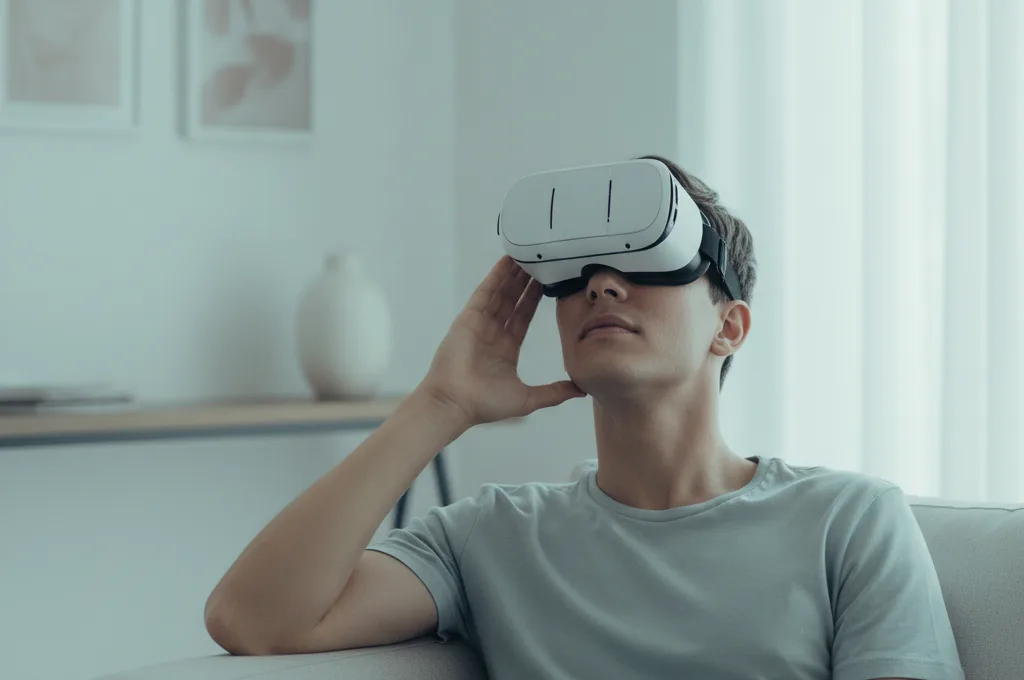
If you just took off your headset and feel dizzy, sweaty, or nauseous, you are not alone. VR motion sickness is incredibly common, especially for new players. You might be feeling frustrated, wondering why a fun game is making you feel so unwell. The good news is that you are experiencing a very normal reaction to virtual reality.
Most importantly, you do not need to give up on your headset. For most people, these symptoms ease over time with the right settings and gradual exposure. Your brain simply needs time to understand this new digital environment.
In this guide, we will explain exactly what is happening to your body, who is most likely to feel ill, and the proven steps you can take to make your virtual reality experience comfortable.
What is VR Motion Sickness (Cybersickness)?
VR motion sickness, formally known in the scientific community as cybersickness, is a form of visually induced motion sickness. It belongs to the same family as car sickness or seasickness. However, there is one major difference. In a car or on a boat, your body is physically moving. In virtual reality, your body is sitting or standing perfectly still in your living room, but your eyes are telling your brain that you are moving.
When this happens, your body reacts with a specific set of symptoms. You might assume that stomach nausea is the main problem. Surprisingly, the data shows a different pattern.
Strong evidence. According to a massive 2024 ACM Computing Surveys systematic review of 223 cybersickness studies, along with a 2024 systematic review in PubMed (39396266), the dominant complaint in VR headsets is actually disorientation. This is followed by nausea, and finally oculomotor symptoms, which include eye strain and headaches.
Disorientation can feel like a general sense of dizziness, unsteadiness, or feeling "off-balance." Nausea can range from a mild stomach flutter to sweating, burping, and a strong urge to throw up. Eye strain often feels like a dull ache behind your eyes or a heavy forehead. If you are feeling any combination of these right now, you can use our comfort and severity check tool to help track your symptoms.
Why Does VR Make You Feel Sick?
The simplest way to understand motion sickness in VR is to look at sensory conflict. Your brain relies on three main systems to understand where you are in space: your eyes (vision), your inner ear (vestibular system for balance), and your muscles and joints (proprioception).
When you play a virtual reality game, your eyes see you running, flying, or falling. But your inner ear feels the steady gravity of your living room floor. This mismatch creates confusion. Your brain does not know which signal to trust. Historically, the brain interprets this specific type of sensory conflict as a sign that you might have eaten something toxic, which is why it triggers nausea to empty your stomach.
But modern research shows that it is not just any movement that makes you sick. It is specifically movement that your brain did not expect.
Strong evidence. "Unexpected vection" is the strongest single predictor of who gets sick in VR. Vection is the illusion of self-motion. In a 2024 study published in the International Journal of Human–Computer Interaction, researchers tested players in the game Mission:ISS. They found that 88% of sick players reported unexpected vection, compared to just 31% of well players. When your brain expects one type of movement but sees another, the conflict spikes. While this is a strong and surprising finding that supports the expectation-violation idea, it comes from a small single study (30 people) with high individual variability, so the exact numbers are not yet settled science.
The type of movement you do in the game also matters heavily.
Strong evidence. Turning around in a game is much harder on your brain than walking forward. A 2020 threshold study from San José State University, published in AIAA SciTech, showed that rotational optic flow (turning) triggers sickness at much lower thresholds than moving forward at the exact same speed. In other words, turning is highly nauseogenic.
Strong evidence. The same San José State University study found that acceleration lowers the onset threshold for forward motion. Moving at a steady, constant speed is much easier on your stomach than speeding up or slowing down.
If you want to read more deeply about the physiological mechanics behind these sensory conflicts, read our full guide on why VR makes you dizzy.
Who Gets Motion Sickness in VR?
If your friend can play intense flying games for hours while you feel sweaty after five minutes, you might feel like something is wrong with you. There is not. Individual variation in VR tolerance is incredibly high. Some people have naturally sensitive vestibular systems, while others do not.
The equipment you use also plays a massive role.
Strong evidence. Head-mounted displays (your VR headset) cause significantly more cybersickness than playing games on a flat desktop monitor. A 2024 systematic review (PubMed 39396266) confirms this is due to the wide field of view, the strong illusion of movement, 3D stereoscopy, and the tiny delays (latency) between your real head movement and the screen updating.
You might also wonder if your age plays a part. You will often see claims online that older adults are more prone to VR sickness.
Emerging / limited evidence. The link between age and VR sickness is heavily contested. While one 2025 randomized controlled trial by Hosp et al. (testing 104 people) actually found that younger participants had worse sickness scores, the wider scientific literature remains mixed. Age does not guarantee you will or will not feel ill in a headset.
Does VR Motion Sickness Go Away?
This is the most common question from new headset owners. The honest answer is yes. For most people, the sickness eases dramatically over time. Your brain is highly adaptable. With repeated, gentle exposure, it learns to ignore the sensory conflict.
In the virtual reality community, this process is called getting your "VR legs." However, you must be careful about how you train your brain.
Emerging / limited evidence. Millions of users successfully build up a tolerance to VR. However, formal, rigorous research on exact habituation schedules is limited. There is no scientifically proven timeline or specific number of days it takes to get your VR legs. We know the mechanism works, but practical guidance relies mostly on community success rather than controlled clinical trials.
The most important practical rule is to never "push through" the nausea. If you try to force yourself to keep playing while you feel sick, your brain will start to associate the smell and feel of the headset with vomiting. This can make your sickness worse in the long run.
Instead, play only until you feel the very first sign of warmth, sweating, or dizziness. Stop immediately. Wait until you feel 100% normal again before trying another short session. For more detailed steps on this process, read our guide on how to get your VR legs.
It is also honest to note that a small percentage of people remain sensitive to artificial locomotion no matter how much they practice. If you are one of these people, that is completely okay. You can still enjoy virtual reality by choosing the right games and using the right comfort settings.
What You Can Do Right Now to Feel Better
If you are currently feeling unwell, take the headset off. Drink some cool water, look out a window at the real horizon, and let your body reset. Once you are ready to try again, you should immediately change your game settings. Many games default to smooth, realistic movement, which is the worst possible option for a beginner.
Here are the most effective settings and changes you can make, ranked by their evidence.
Use a Comfort Vignette (Blinders)
Strong evidence. A dynamic field-of-view restriction—often called a "comfort vignette" or blinders in your game's menu—is highly effective. This setting darkens or narrows the edges of your screen whenever you move or turn. A 2021 study by Teixeira & Palmisano in the journal Virtual Reality tested 40 players in the game Marvel Powers United VR. They found that this vignette significantly reduced cybersickness in real commercial gameplay. It works by reducing the amount of moving visual information hitting your peripheral vision.
Turn on Snap Turning and Teleportation
Strong evidence. Never use smooth joystick turning. Instead, enable "snap turning" (which rotates your view instantly in discrete chunks) and teleportation (which moves you instantly from point A to point B). A 2020 controlled study by Farmani & Teather in the journal Virtual Reality found that snap turning cut sickness scores by about 40%. Furthermore, discrete forward teleport-style movement cut scores by about 50%. These settings eliminate the visual sliding motion that confuses your brain.
Use a Physical Floor Fan
Emerging / limited evidence. Pointing a physical floor fan at your body while you play is one of the most popular community tips. The blowing air helps keep you cool (combating the "VR sweats") and gives your brain a constant, real-world physical anchor to tell you which way is forward. While widely recommended and highly practical, rigorous VR-specific studies on airflow are still limited.
Choose Gentle Games
Moderate / practical. Do not start your VR journey with rollercoasters, flying simulators, or fast-paced shooters. Start with stationary games where your real body movements match your virtual body movements exactly. Games like Beat Saber, SUPERHOT VR or Job Simulator are excellent for beginners. You can browse our VR game comfort ratings to find titles that are safe for your stomach.
What About Pills and Wristbands?
You might be tempted to buy remedies to fix the problem quickly, but you should manage your expectations.
Weak evidence. You will often see ads for acupressure wristbands (like Sea-Bands) or ginger supplements. While these have some general motion sickness use, there is little VR-specific evidence that they help reduce cybersickness.
Emerging / limited evidence. Over-the-counter antihistamines like Dramamine or meclizine are very popular. While strong general motion-sickness evidence exists for these medications, rigorous VR-specific evidence is limited. Furthermore, they often cause heavy drowsiness, which can ruin your gaming experience anyway. For a deeper look at what actually works versus what is just marketing hype, check out our guide on how to stop VR motion sickness.
When to See a Doctor
Because VR motion sickness is a sensory issue, the symptoms usually fade within a few hours after taking off the headset. Your brain simply needs time to recalibrate to the real world.
Emerging / limited evidence. Some users experience a post-VR "hangover" or sopite syndrome. This involves prolonged drowsiness, mild dizziness, or feeling detached from reality for several hours after playing. While many users report this, formal VR-specific evidence on the exact duration and mechanisms of this hangover is limited. You can read more about dealing with a VR hangover here.
However, you should always listen to your body. Virtual reality is generally safe, but it can sometimes unmask underlying balance or visual issues that you did not know you had.
You should consult a doctor if:
- Your dizziness, nausea, or imbalance lasts for days after using VR.
- You start experiencing dizzy spells or vertigo when you are not using the headset at all.
- You have a known pre-existing inner ear condition, vestibular disorder, or history of severe migraines, and VR triggers unmanageable symptoms.
For the vast majority of people, VR motion sickness is a temporary hurdle. By taking short breaks, using comfort settings like snap turning and vignettes, and being patient with your body, you can train your brain to enjoy virtual reality completely symptom-free. Take it slow, adjust your settings today, and your next session will likely be much more comfortable.
Frequently asked questions
Is VR motion sickness normal?
Does VR motion sickness go away?
How long does VR motion sickness last?
Can you build up a tolerance to VR?
Why do I get motion sick in VR but not on rides?
This is general, evidence-based information, not medical advice. If dizziness or imbalance persists long after VR, or you have a known ear/vestibular condition, see a doctor.